
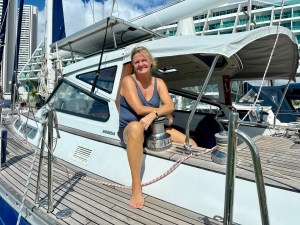
All is well on board Saphir, and we are ready to cast off and sail our last leg with a stop at Fernando. There is full activity on the bridge among the boats, making sure our vessels are ready for the long sail. One of the tasks is to get a clean propeller and bottom with the help of divers. We also receive assistance from them to check our propeller, which turned out to be full of barnacles and other things. It feels good to get that fixed before we head out. The list of things to do never ends; we just have to prioritize: safety first, comfort second, and lastly speed. When the diver is almost done, I hear the start of the Vhfn, and for the first time, we are not at the starting line but pass it 20 minutes later. It’s a bummer to miss the start, but I’m glad we got a clean propeller.


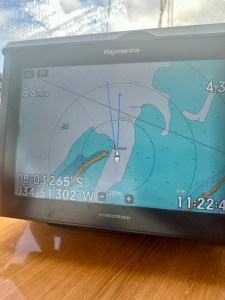
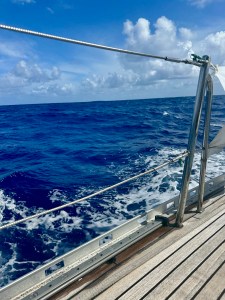
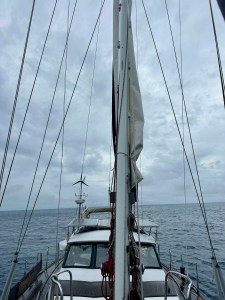
As we round the breakwater, Mistral is waiting for us. I am so grateful to have them close by in good times and bad. Our mainsail is not functioning as it should, and Mistral’s radar is not working either. What I unfortunately realize as we leave is that I made a huge mistake: the seasickness patch was not on, and it’s quite rough out here. The waves are coming in from the side, making it definitely an uncomfortable sailing. None of us wanted to go down below. You can guess how it went; not well, there was no cooked meal on board during the crossing, just some dry crackers. Luckily, it was only 200 nautical miles and about 48 hours to Fernando. After several attempts, Edgar gives up getting the last meters of the mainsail in, so it will have to be tied to the mast. It’s nice to have some shelter behind the island when we have to deal with rain. Luckily, at least I have put on my rain jacket. Edgar gets quite wet but soon sits under cover again while I prepare to drop the anchor. After a tour around the anchorage hoping to find a good spot without being too close to other boats, I free drop the anchor. We end up a good way out from the harbor and land. It’s certainly not the best spot considering the rolling, but the anchor holds well, and the boats around us are at a safe distance. A little food and a couple of hours of sleep, and we are ready to head in.


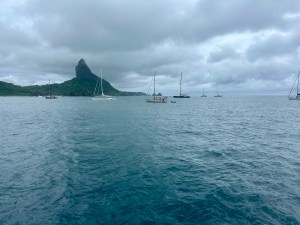
We check in and make a joint decision with Karen and Chris to only stay for two nights, as it’s going to rain a lot in the coming days and it’s very rolly on board, so we might as well be on our way.
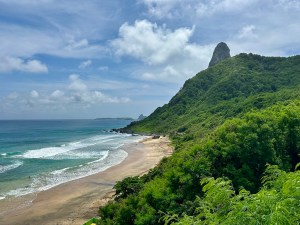
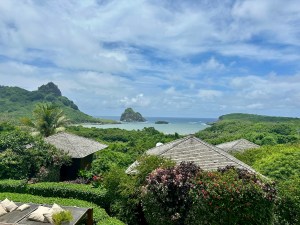
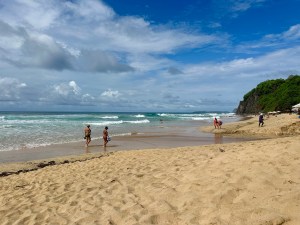
The next day, we have rented a beach buggy to get around the island. It’s a bit bumpy in the back, but we enjoy the sun that peeks out as we drive around the island. We have lunch at a cozy hotel with a fantastic view, then spend a few hours on the beach before it’s time to head back to the marina and return the car. The evening ends with dinner at the restaurant up the hill, overlooking our boats.




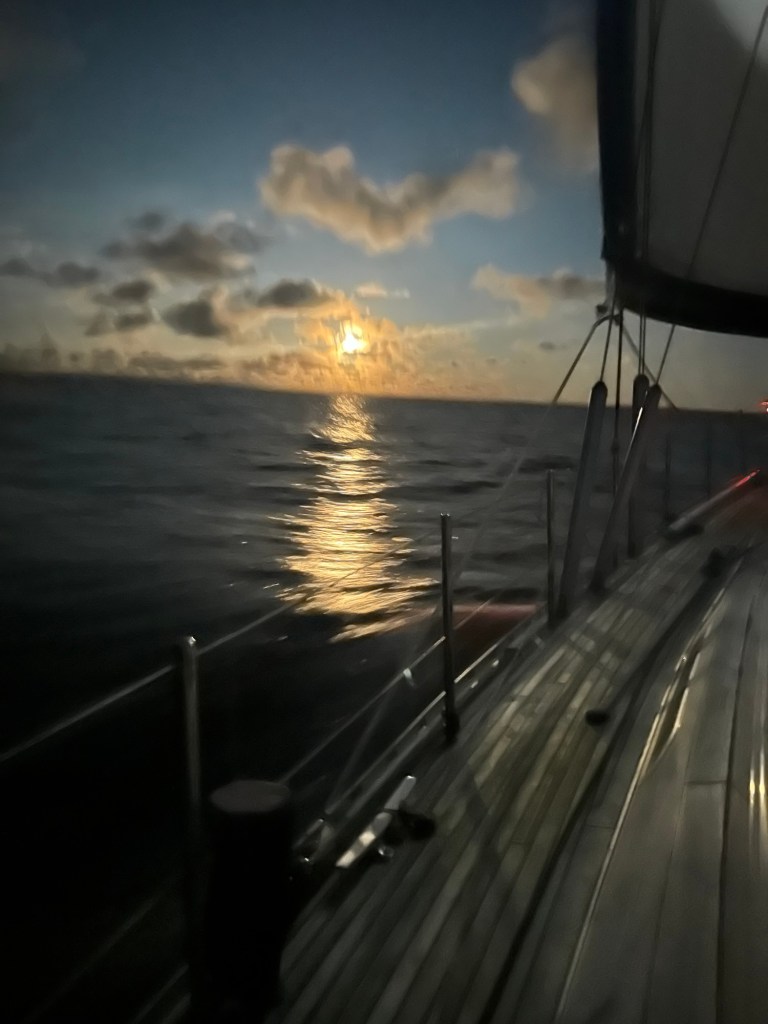
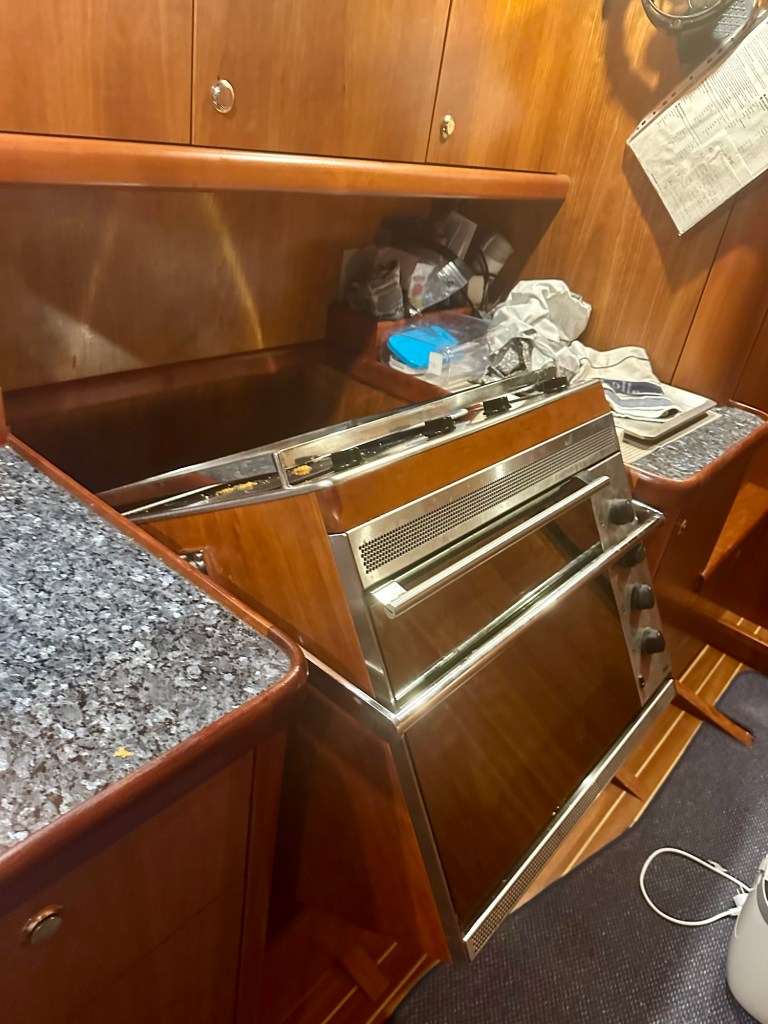
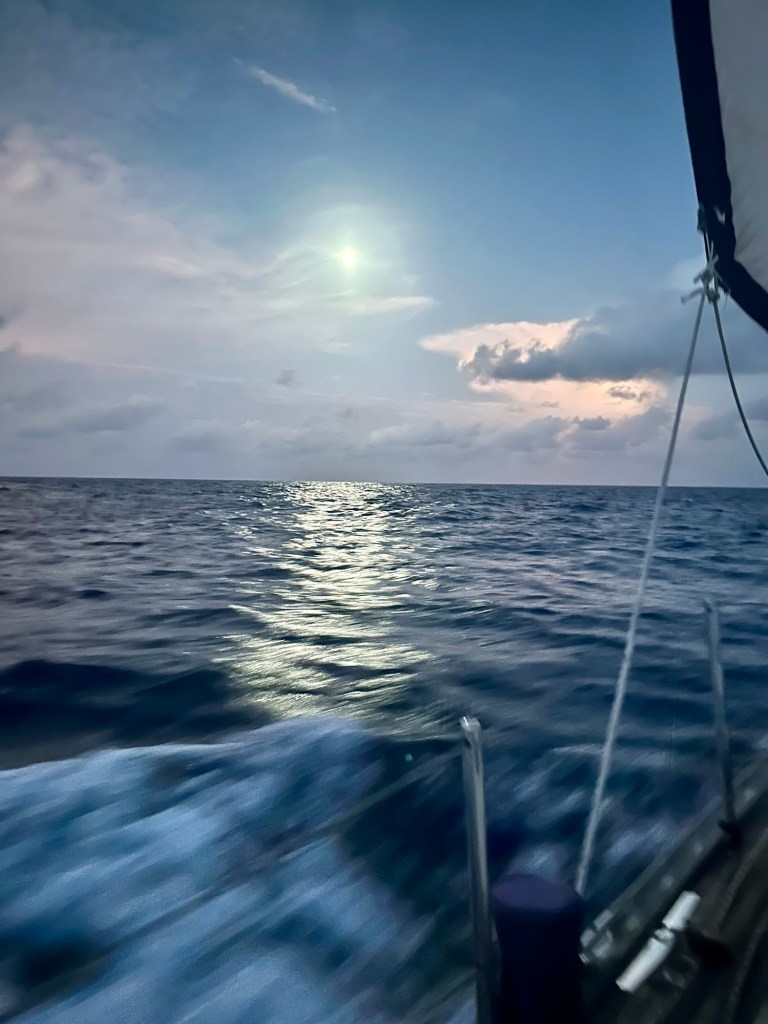
The next morning, Chris comes to pick up Edgar, and they head in to check us out. It takes a little while, so we leave around 3 PM together with Mistral. It turns out that most others have also decided to depart a day earlier. We keep ourselves no more than 1-2 nautical miles from Mistral so that we can inform them during the night if a storm is approaching and if we should change course to avoid the worst of it. Not only is their radar not working, but now they’ve also had trouble getting their mainsail in. It’s clear that our boats are tired and need to rest. We sail on with the genoa and small foresail out, and a little bit of the mainsail as support to reduce the rolling. The days and nights pass, and we get into a sleep rhythm. Cooking goes somewhat okay. It’s difficult to cook when it’s tilting and rolling. I gave up after all the food ended up on the floor after a serious roll, and the stove locked up. The rest of the trip, we served meals that only needed an oven. Luckily, I had filled the freezer with ready-made lasagna, pies, and pizzas. The weather varies from fantastic sunrises and sunsets to cloudy and pouring rain. Our blue canopy keeps us dry and goes up and down.

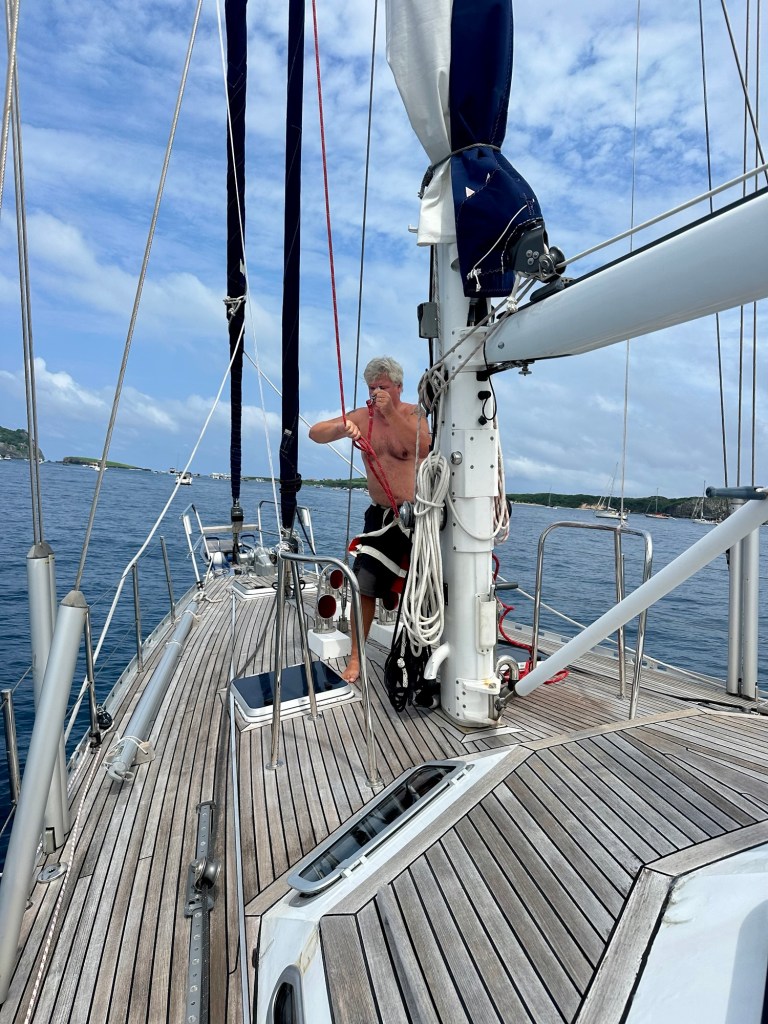



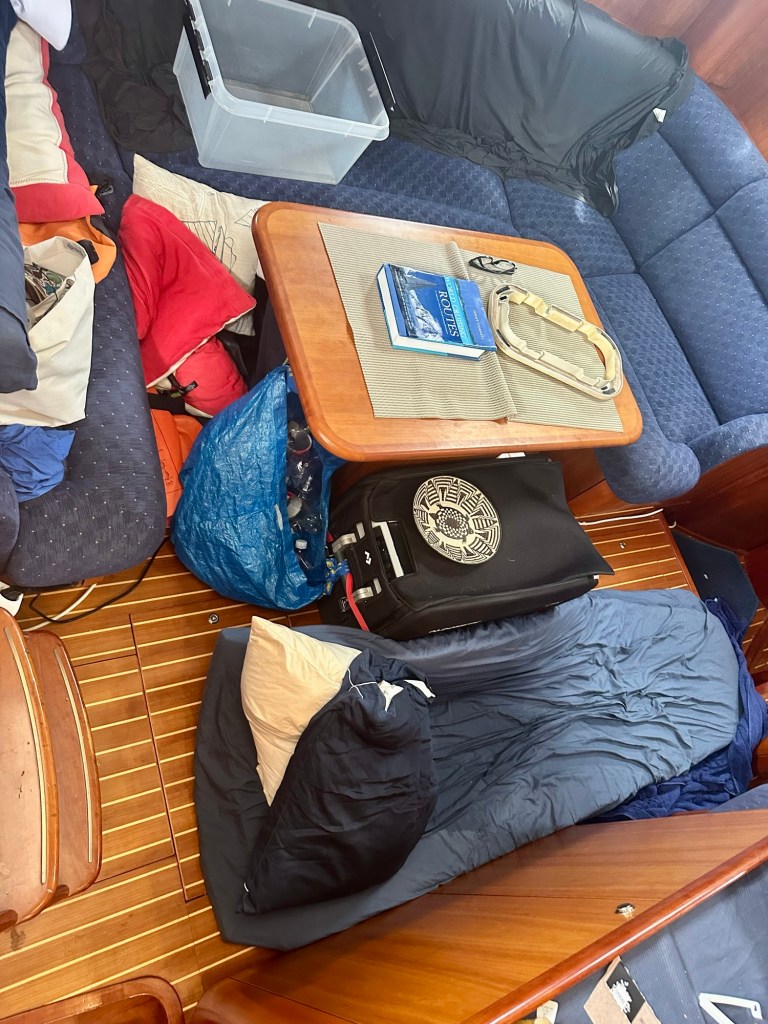

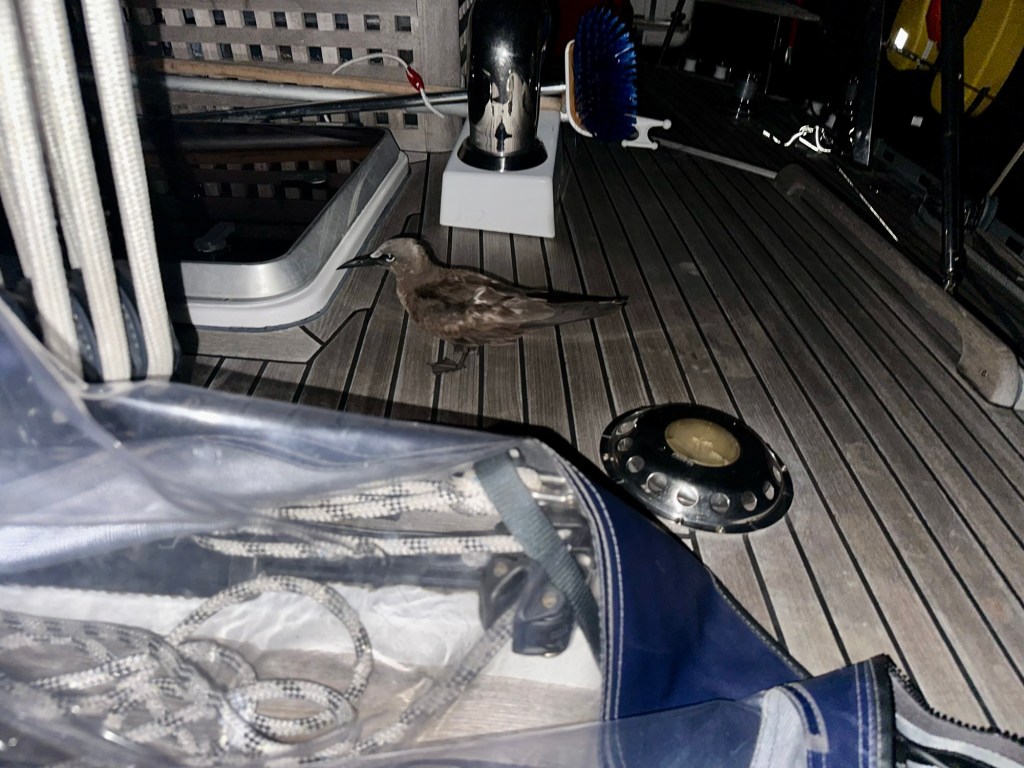




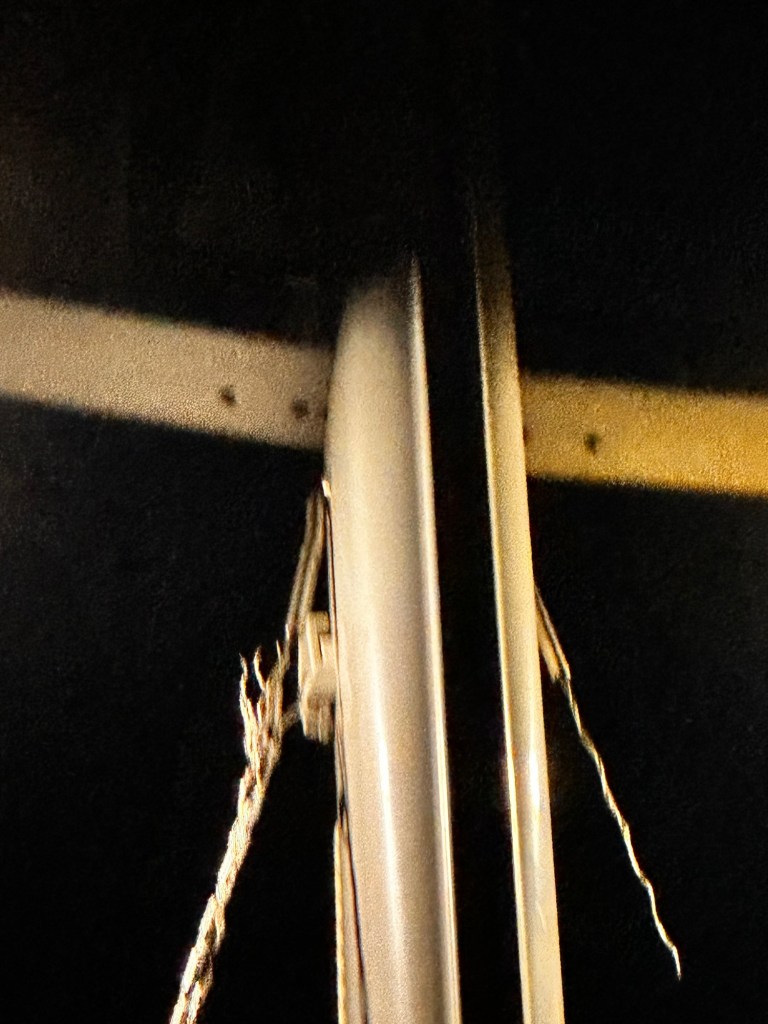
On day eleven at 03:45, I hear a strong bang. The starboard shroud is very loose with just a tiny wire remaining. The engine is started, and down with all sails, and incredibly we also got the whole mainsail in. We discuss what to do when we hear another bang. Now the shroud is lying over the boom and down to the deck. Thank goodness the boom was where it was; otherwise, we might have had the shroud through the window. Now we have no choice. Edgar is hoisted up to the first spreader so he can secure a line around the mast, tightening it down and around the shroud’s attachment on deck to the winch so we can tighten it properly. We inform Mistral of our mishap and that we have the engine on. Now we just want to arrive with an intact mast. They try to keep up, but they end up behind since they can’t use their engine due to noise. Luckily, we have passed all the bad weather, so there’s no danger from that and only 190 nautical miles left, which is just over a day’s sailing/motoring. Not far to go now.


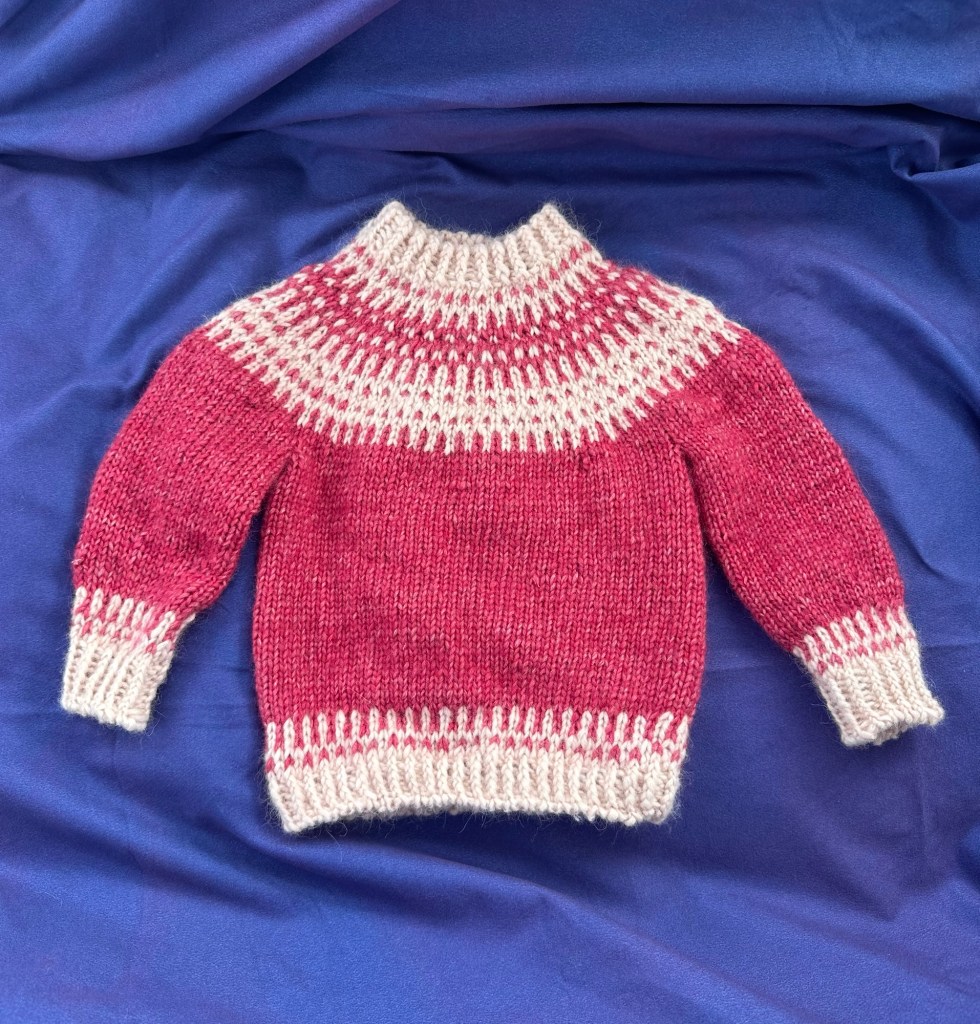
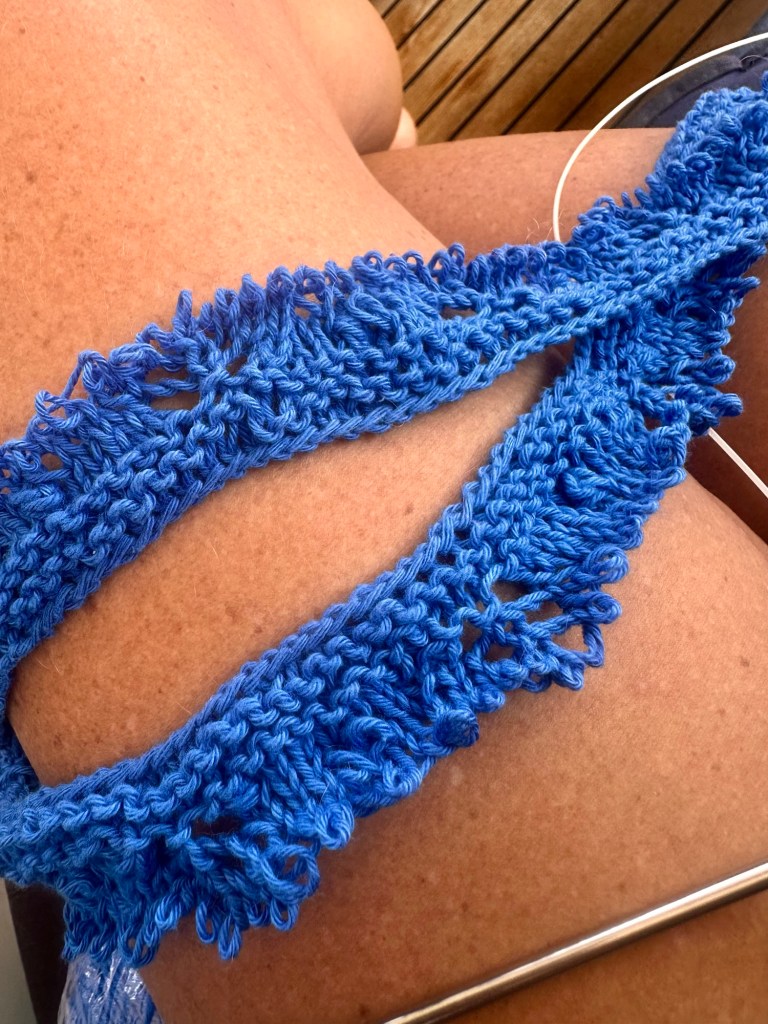
During my last night watch, my thoughts swirl while my knitting grows. It’s hard to digest that we are almost in Grenada, thus having sailed around the world. This last stretch has been a bit too dramatic, with boats appearing without showing on the plotter and boats dragging a long pipe/line behind them for 3 nautical miles that we had to keep a distance from and avoid. In the midst of these thoughts, I hear a bang. No, not the next shroud too… yes, it is. It didn’t break but several wires came loose. I wake Edgar up and go lay down. It was almost the end of my watch anyway.
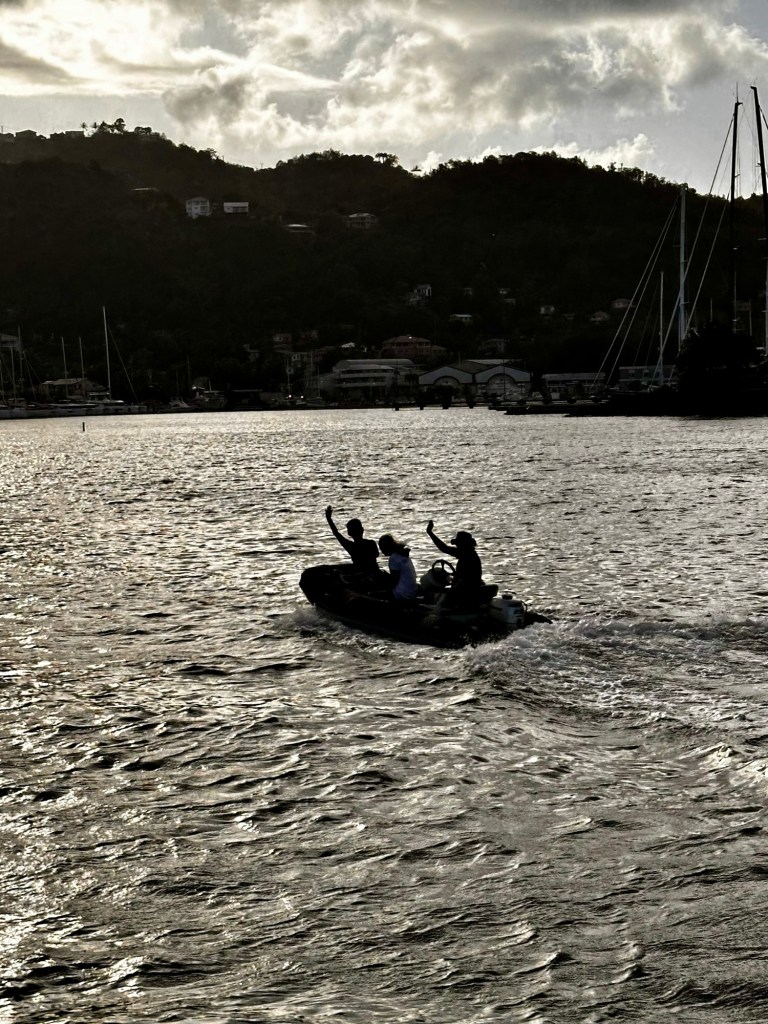
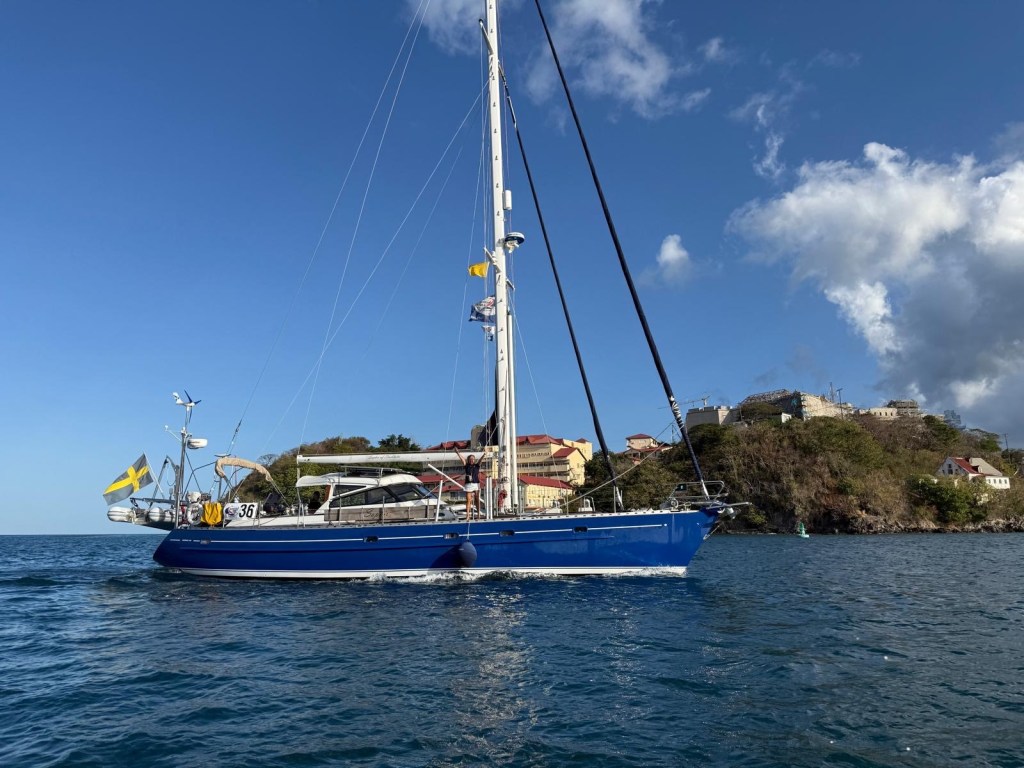
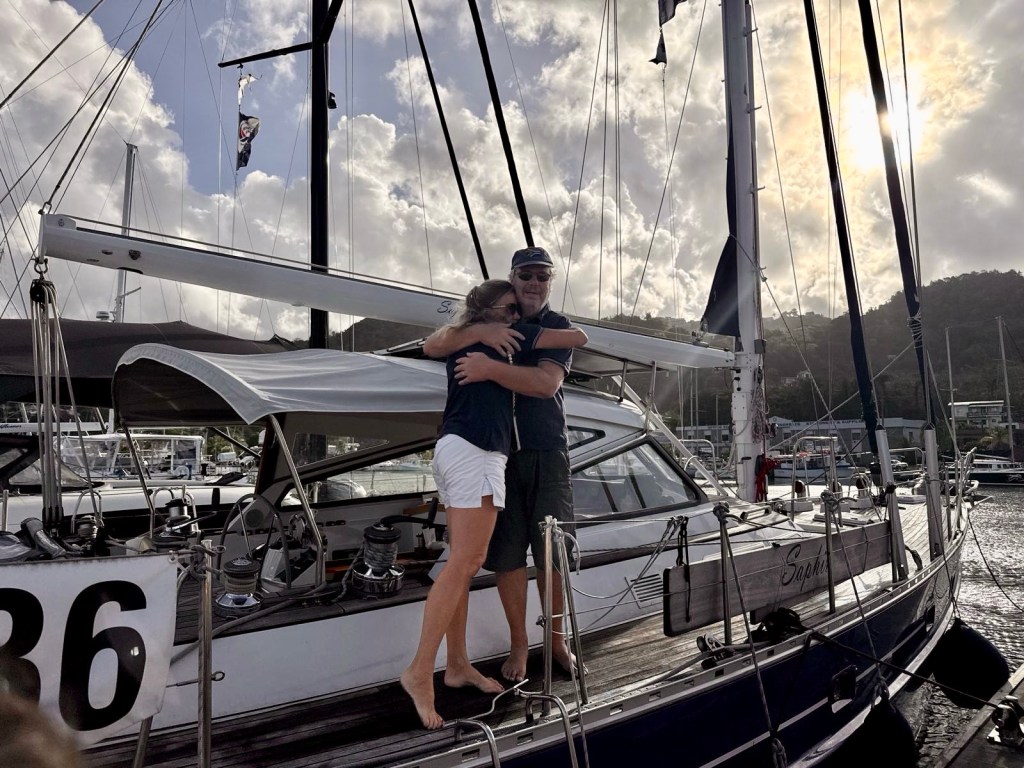
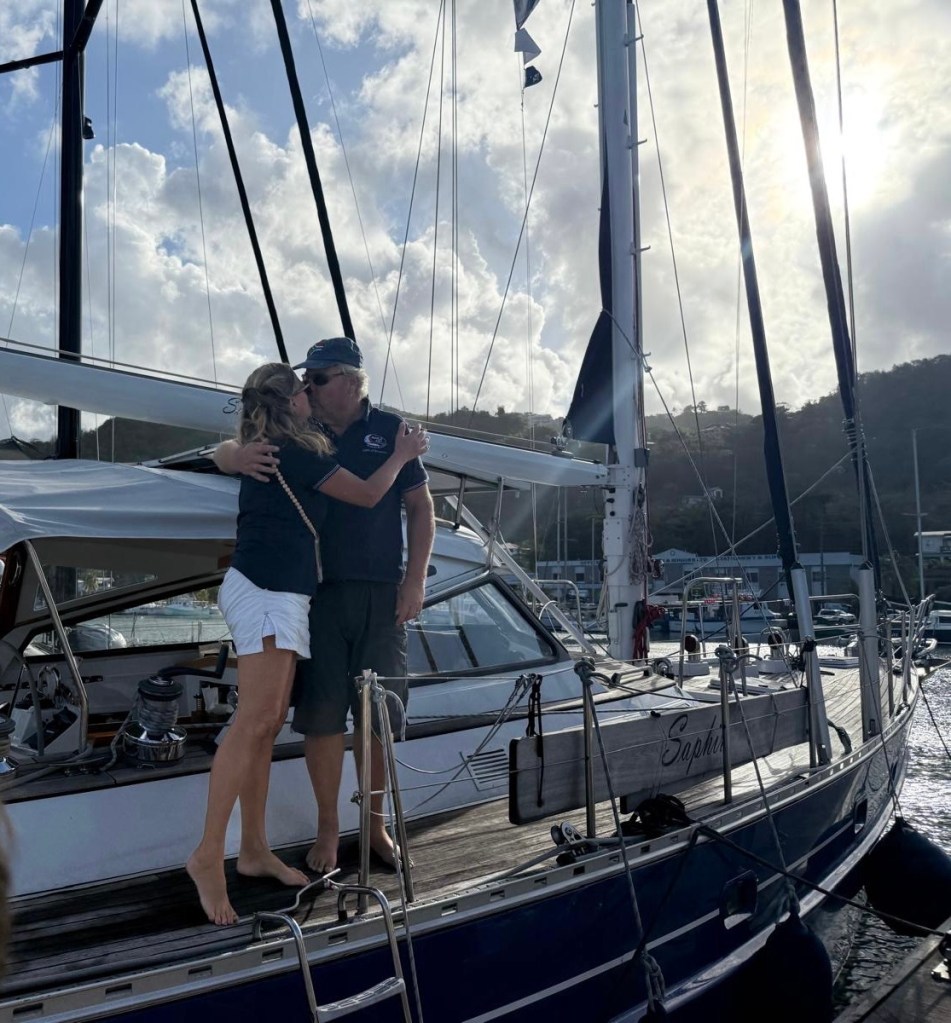
On Monday morning just after seven, we cross the finish line! Yippee, we have sailed around the world! We were especially happy when we saw a dinghy coming out to meet us. It was Mark and Clare from Amanzi and Julia from Renegade. Once inside the marina, we are welcomed by many of our sailing friends and receive some rum punch. Tears come as I step off, and the hugging party begins. We have arrived, and the mast is still intact. Now it’s time to celebrate for a few days with our Arc friends.





 Sailing with Saphir